


What This Film Taught Me About Being Present – by Yasmeena Ali
I did something unusual when I first encountered this film, I listened to it before watching it. And,
what struck me immediately, was how much you notice when you take the visuals away: the
catch in someone’s breath, the sound of skin on skin, the soft patter of rain outside. It made me
realise how much we rely on what we see, sometimes at the expense of everything else we
could be experiencing.
This isn’t about one way of experiencing pleasure being better than another. Visual desire is
powerful and real, there’s nothing wrong with finding bodies beautiful, with the thrill of
watching, with aesthetic pleasure. The opening pool scene embraces this fully: slow motion,
idealised fantasy, bodies moving in ways that are undeniably hot to watch. The film knows this
and celebrates it.
But then something shifts. The narrator says, “Imagine them alone, nobody watching, just each
other.” And the film asks a simple question: what happens when pleasure isn’t about the
performance, but about the people actually in the room?
What I found most compelling wasn’t that the film rejects visual pleasure, it doesn’t. It’s that it
shows us there’s something else happening simultaneously, something we might miss if we’re
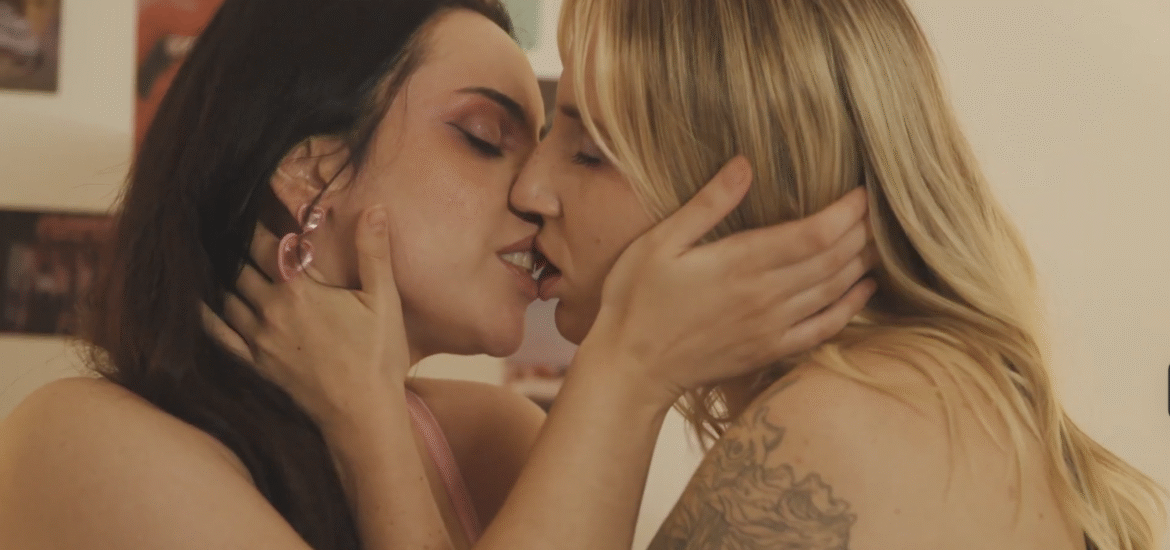
only focused on the aesthetics. The camera doesn’t pose the bodies, it follows them. Jane and
Maria aren’t performing for us; they’re completely absorbed in each other. And somehow, that
makes it even more intense to watch.
I’ve been in moments where I realised my mind was somewhere else, thinking about angles,
about whether I looked good, about what I was “supposed” to do next. I’ve been with partners
who seemed lost in their own heads too. In those moments, there’s a disconnect. You’re
physically together but somehow alone. It’s not about gender, anyone can slip into performance
mode, anyone can drift into their thoughts.
The scene by the window stays with me. Rain outside represents all the chaos and noise of the
world, and Maria is distracted for a moment, looking out at it. But Jane doesn’t stop, she uses
touch and presence to draw Maria back. The sounds of their pleasure become louder than the
rain. It’s such a simple moment, but it speaks to something we all navigate: how do you stay
connected when distractions inevitably happen?
There’s a moment where Maria is using a vibrator, and Jane pulls back – not disconnecting, but
giving space. She watches with obvious joy. That balance of space and connection, of being
intensely present while letting your partner have their own experience, feels like the heart of real
intimacy. It’s not about constantly touching or filling every moment; it’s about being there, fully,
for whatever unfolds.
I loved watching Jane give Maria so much attention with her tongue, then kiss her afterward. The purple vibrator used as a massage ball between their bodies as they find a rhythm together. The eye contact. The way each person’s pleasure seems to amplify the other’s. These aren’t
techniques to replicate, they’re reminders that intimacy is a conversation between bodies, not a
performance for an invisible audience.
Here’s what I keep thinking about: In your own intimate moments, are you present or are you
performing? Are you experiencing pleasure or thinking about whether you’re doing it “right”?
When your mind wanders, and it will, how do you come back? Do you give your partner space
to have their own experience while staying connected?
Whether you’re exploring alone, connecting with a partner, or navigating intimacy as a couple,
the invitation is the same: What if you let go of the script? What if pleasure wasn’t about meeting
expectations but about discovering what happens when you’re fully present?
This film doesn’t tell you how to have sex or what good intimacy looks like. It just shows two
people completely absorbed in each other and asks: what would your intimate life look like if
the only audience that mattered was the person you’re with or yourself, if you’re alone?
I don’t have all the answers, but watching this film made me want to bring more of that presence
into my own life. Less thinking about the angles, the aesthetics, the performance. More feeling,
listening, responding. Both the visual beauty and the emotional presence can exist together in
fact, when they do, that’s when something truly magical happens.